
Soupé la Vie: Roody Senecal 🐳🩵
- rich awn

- Sep 26, 2025
- 10 min read
Editor’s Note from Sally 💌
It’s hard to put Roody into words—he’s a strong force holding our universe together. Soft-spoken and impossibly humble, he somehow embodies a dozen roles at once. I first met him at Yoga Tribe as a student before I started teaching there; it’s become one of my most beloved spaces precisely because of the studio’s culture. From teens to elders, it’s the rare studio where you feel true belonging. The orbit here is respect, trust, and care—and Roody is its gravity.
He literally built the studio, and when something breaks, he’s the first with a tool in hand. And yet, just when you think you’ve got him pegged as the caretaker, he rolls up on his motorbike—reminding you he’s also a wild man.
This conversation explains so much about the qualities the studio wears, all that we admire in him, and why we respect him so deeply. He is someone who truly embodies yoga—his compassion and his presence are to be experienced, unlike any other.
Roody, we’re so grateful to have you here at the Whaleness Club! 🐳

Intro & Interview by Rich Awn
I’ve been practicing yoga, primarily the Ghosh/Bikram sequence, in and out of hot studios for over 20 years. I believe this practice is directly tied to maintaining strength, mobility, resistance to illness, and an energetic flow that shapes the way I move through the world. Over time, I’ve taken thousands of classes and met just as many yogis, instructors, and studio owners. Yet in all those years, I’ve never encountered anyone quite like Roody Senecal.
To call him a business owner, teacher, dancer, musician, engineer, father, or athlete only begins to describe the many roles he embodies. I first encountered his calm, quiet presence at Yoga Tribe, his studio in Prospect-Lefferts Gardens, Brooklyn. Through the mirror, I watched him float effortlessly between postures, inverting fully and flowing through vinyasas with grace and control. Without knowing who he was, I felt compelled to approach him after class. I told him I wanted to learn how to transition like that. He smiled humbly and said, “You should practice more.”
Those simple words left an immediate impression. A year later, as I listened to him share his life’s story during this interview, I began to understand how his direct simplicity, measured flow, and generous spirit were forged. It is with great joy and reverence that we share his story here. Whalecome, Roody! 🐳
✨✨✨
Richie: You are one of the most important members of our community, Roody. Thank you for taking the time to share your story with us. While I mostly want to talk about yoga, I also want to explore your background. What were you like as a boy growing up?
Roody: Wow. I feel like I’m a very different person now compared to when I was seven. I was definitely active, but that doesn’t quite capture it—I was just buzzing with energy! Growing up, I was fortunate to be raised by my grandparents. I didn't know my parents; they left when I was about three years old, and I didn’t meet them again until I was twelve.
During the summers, my grandfather would be there for me. I remember waking up in the morning, going to greet him, and having a little chat. He would give me a bit of money—like fifty cents—just enough to head to the bakery next door for fresh, hot bread. I had this old banana-seat bicycle, and I would ride down Main Street to pick up my friends, both named Jean-Jean. We’d ride all around town together.

Richie: This was in Haiti?
Roody: Yes. In Haiti, Sunday dinners were around noon, so I had to be home before the church bell rang. No matter where I was, I would speed home as soon as I heard that first bell.
My grandfather was such a significant figure in my life. I loved him dearly. To this day, whenever I face a tough decision, I think, “How would my grandfather handle this?” He was well-known in town, had a lot of land, and would even ride horses. I remember walking down Main Street with him, feeling so proud as everyone greeted him with, “Bonjour, Monsieur Michel.” We would take evening walks together, often with our dog, and I cherished those quiet moments. He was strict but had defined rules.
Richie: What was he like as a disciplinarian?
Roody: He was fair. I remember once, I took a peanut from a drying slab that wasn’t mine. He caught me and said, “Did you take a peanut?” I admitted it, and he didn’t yell or scream. He just gave me two hits and we moved on. That structure and clarity in discipline helped me understand respect and expectations around respect.
When he passed, he left his land to the people of the village—those who worked it for generations. I admire that decision. He believed in mutual respect and trust, which I carry into my work at the yoga studio. I trust my staff to teach their classes in their own way. If a student has an issue with their classes, it’s not my place to tell the teacher to change their class.
Richie: It's their time.
Roody: Exactly. It's their class and it's their time. If I didn't trust them or respect them as a teacher then why should I have them teach? That’s how my grandfather was and I’m honoring his legacy.
Richie: It sounds like you deeply embody that respect you learned from him. When did you leave Haiti?
Roody: I left Haiti when I was twelve. My parents were in the U.S., and I had never met them before. I had only seen pictures.

Richie: Meeting your parents must have been a significant change.
Roody: It was tough, especially with my dad. I had such a strong bond with my grandfather, who was straight-laced and sober.
When I came to America, I found out my dad was the complete opposite of my grandfather. My dad drank and smoked a lot – his rules were chaotic. For a long time, I hated him for that. But as I grew older, our relationship evolved. Near the end of his life, we became best friends.

Richie: How many siblings do you have?
Roody: I grew up in a house full of women—four sisters and a half-brother who wasn’t around much—so it was mostly just me, my sisters, and my dad. When my sisters told me it was my turn to take care of him, I stepped up, though not without resentment. I cooked for him, changed his urine bag, and visited every morning, usually angry about it.
One day he asked me to make soupé, this simple dish of bread in broth with spices. I tried, but when I brought it upstairs, he took one sip, spat it out, and said, “This is disgusting! I won’t eat this.” I was furious. Here I was, showing up every day, cooking, cleaning, tending to him—and he wasn’t even grateful.
Then, while changing his urine bag, I heard this voice in my head: What are you doing? It’s not his fault he’s sick. It’s not his fault who he is. You don’t even know his story. That moment stopped me. I realized I had never really taken the time to talk to my dad, to know him deeply.
It shifted everything. I saw that identity is just a collection of experiences, and what matters is how we respond to them. Someone can punch you in the face—you can meet that with anger, or you can meet it with compassion. It’s a choice.
So I started approaching my dad differently. I talked with him, listened to him. And from then on, our relationship completely changed.
When he died, I was the last person he saw. I was by his bedside, joking with him. If my sisters hadn’t assigned me that role, I might have carried resentment for a lifetime.
Richie: That’s such an important lesson. Softening can lead to healing.
Roody: Absolutely. I learned that anger only creates tension and doesn’t resolve anything. That’s what my father taught me.
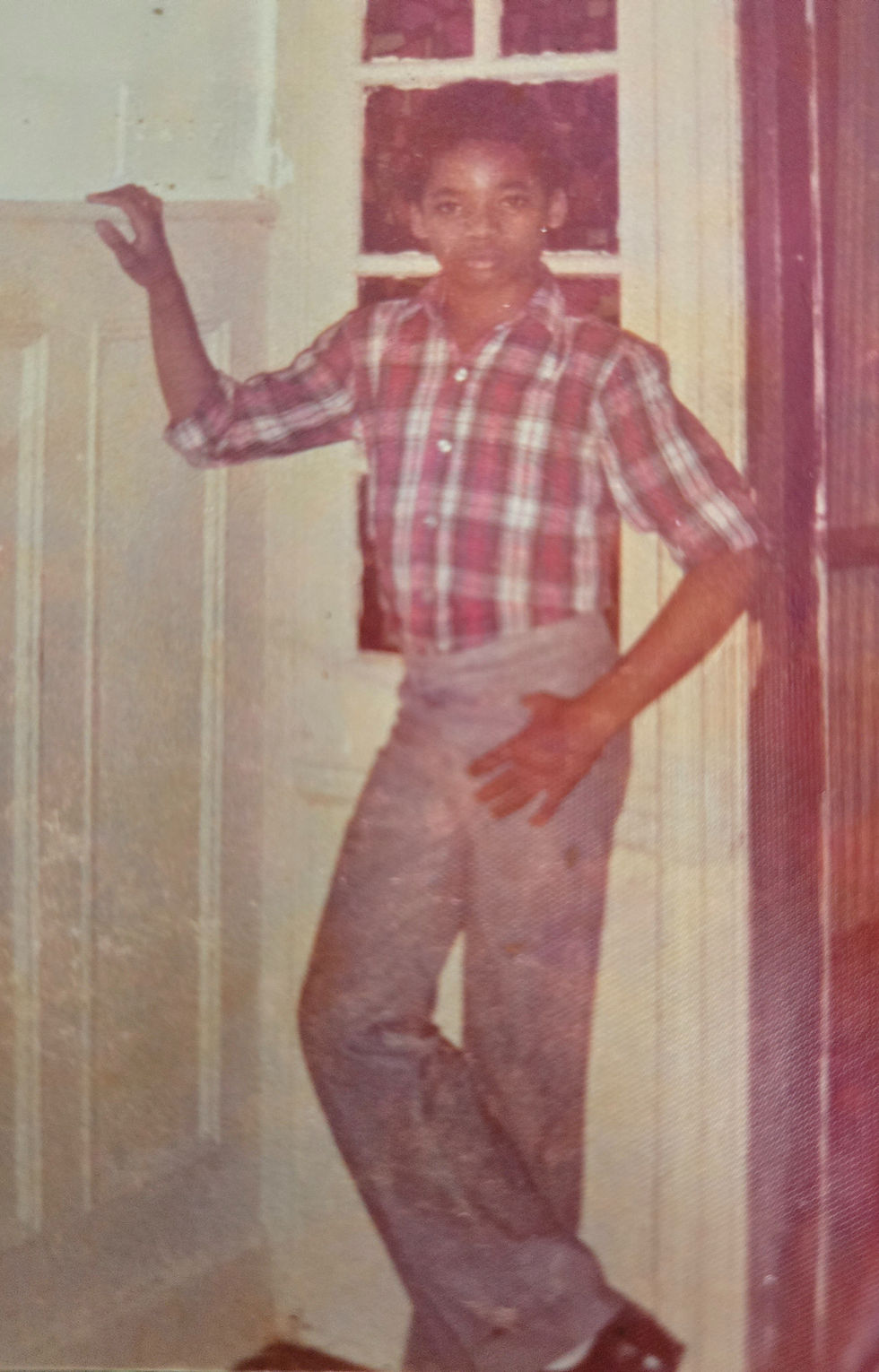
Richie: Your father passed away at what age?
Roody: He was 85 when he passed in 2016. I spent my 20s and 30s trying to distance myself from him. In my fifties, I gained an entirely new perspective.
Richie: It seems that as you softened, miracles happened in your life.
Roody: I believe this about all people who walk into your life. It's a miracle that you and I have run into each other. We grew up in vastly different places, with cultural differences and somehow, we ended up practicing yoga together. There's an energy that occurs when you meet people. If you’re open, there’s always a lesson. What we might call a fluke or coincidence has greater gravity than what we assign it.
I don’t think my dad was ever fully conscious of what he was doing. His anger was the result of his own childhood trauma, things he never had the tools to process. He expressed that anger toward his children. The people closest to you are often the ones who trigger you the most.
My yoga and meditation practice gave me the clarity to see that. It’s easy to ignore those brief flashes of insight, but practice teaches you to pause and reflect instead of reacting. That’s the work—both the physical asana and the meditation. It helps us become more mindful in our words, actions, and relationships. Every obstacle is an opportunity. Consciousness leads to emotional maturity, but introspection takes discipline.
Richie: When did you start to embody this practice and decide to make it your profession?
Roody: When I started practicing in 2001, it was purely physical. I did one posture after another—it felt like exercise. I even had a yoga studio at that time. My students were always sharing how grateful they were for the transformation of their yoga practice. I didn't feel it myself. That shift came later, thanks to Rebecca Emmalee Causey, who partners with Jared McCann at LightHouse Yoga School.
About 10–12 years ago, I owned a hot yoga studio called Bikram Yoga South Slope on 5th Avenue and 15th Street in Park Slope. Rebecca asked if she could teach something different. Hot yoga is powerful, but it can become repetitive. She brought in other practices, beginning classes with meditation and guiding us through a different flow. This broke me out of my normal rhythm and opened me up to changing my routine. This was the beginning of a bigger shift in mindset. I started seeing things differently.
Richie: Which ties into what you said about people arriving in your life with purpose—Rebecca not only disrupted your routine but challenged the whole premise of the studio.
Roody: The Bikram/Ghosh sequence is still incredibly powerful, and it will never go away. Our Bikram program at Yoga Tribe is very powerful. It can be very basic if you just go through the motions, or it can be the most technically challenging practice you’ll ever do. I tell teacher trainees that the Bikram sequence is actually impossible to do perfectly. Even with awareness of your muscular engagements and the locks, you have to cheat a little just to survive.
Richie: 100%.
Roody: But stepping away from it gave me a new perspective. Rebecca got me to question my thoughts, which shifted how I reacted—not just outwardly, where I always tried to be compassionate, but inwardly as well. When I was a kid I wanted to be a priest so I’m drawn to the idea of quiet meditation.
Richie: You mentioned wanting to be a priest when you were young.
Roody: Yes, I was drawn to quiet meditation and a life of service. I had a priest at my school who respectfully engaged with me as a child. That respect left a lasting impression on me, and I strive to treat everyone the same, regardless of age.
Richie: You’ve had some remarkable role models in your life.
Roody: Definitely! Transitioning from the Park Slope location to the current Yoga Tribe complex was a journey. We had two locations, but when my landlord passed away, things became complicated. His cousin took over and wanted to raise the rent significantly. I started looking for a new place and luckily found our current location on Washington Avenue.
Richie: It’s unfortunate how property transitions can be so tumultuous.
Roody: Yes, it all worked out. I believe that if you trust yourself and cultivate good energy with those around you, things fall into place. Even in difficult times, being straightforward with my students helped build loyalty.
Richie: You may have expected some loss during the transition, but it sounds like you were pleasantly surprised.
Roody: There was very little loss! The yoga studio has been a gift. Even during COVID, when we closed, only one person asked for a refund. Everyone else offered support, paying for online classes to help sustain our community. I try to express my gratitude to them by keeping the space welcoming and alive.
Richie: Holding space in that way is a beautiful expression of gratitude and compassion.
Roody: Yes, it’s really about the people. I’m not a guru. My strength comes from my community. Even when I face personal challenges, the smiles and hugs from my students can completely change my day.

Richie: You're a beautiful man, Roody. Before we wrap up, I know you still have that rambunctious seven-year-old spirit. You’re a snowboarder, a dedicated yogi, a meditator, and a software engineer. What else do you enjoy?
Roody: I owe this personality trait to my dad. I know we spoke about my issues with my dad, but he was a very smart guy. He used to say, “There is no such thing in this world that you can’t be. Don't assign a limit to yourself.” As human beings, we could do whatever we put our mindset to. I love snowboarding. I used to love dragon boating but I don't do that anymore.
Richie: Where can someone get involved in dragon boating?
Roody: At Flushing Meadows Park in Queens, near LaGuardia Airport. It’s a bit of a dirty spot, but I paddled there for years and made some lifelong friends.
Richie: Thank you for sharing your adventures and wisdom with us, Roody.
Roody: It’s been healing to talk about my life. Thank you and Sally for everything you bring to our community.

✨✨✨
Outro by Rich Awn
On reflection, I wonder if it’s ever truly possible to tell the story of a life in forty minutes. Could it even be told in forty hours, days, weeks, or years? My time with Roody left me with both a deepened bond—strengthened by the glimpse he offered into his life—and a yearning, knowing there is still so much more to learn.
The story of a life as rich and varied as Roody’s can only be told fully by the man himself. If you have the chance, visit him at his shala and move with him on the mat.
If there’s one lesson I carry from our conversation, it’s this: we all hold the power to build community through softness of heart, stillness of body and mind, and a life lived in service.
Experience it for yourself. Sign up for a class at Yoga Tribe here.
🐳
--
Rich Awn
Edits by Sally Choi


Comments